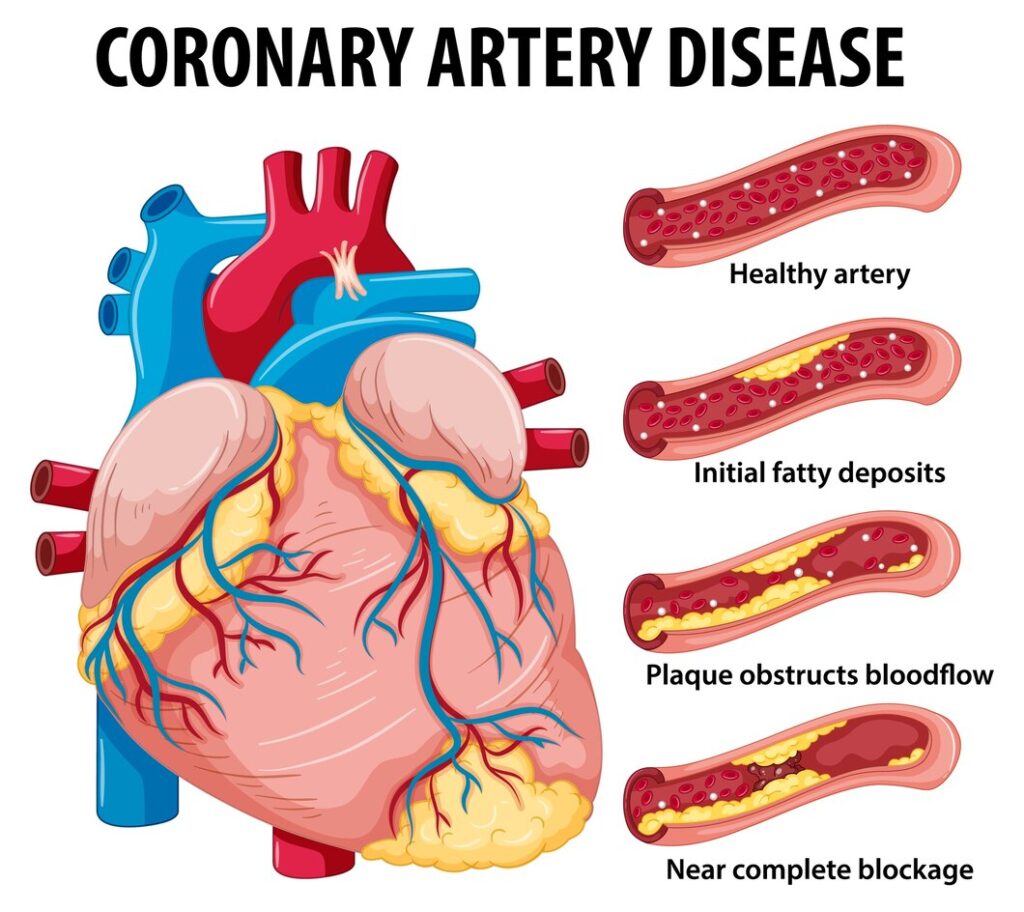
Coronary artery disease is a common heart condition that occurs when the coronary arteries become narrowed or blocked. These arteries supply oxygen-rich blood to your heart muscles. Coronary heart disease develops when cholesterol deposits and other substances build up inside an artery. If the blockage becomes severe, it can lead to a heart attack.
Symptoms
The most common symptoms of coronary heart disease are chest pain or discomfort, often described as pressure or tightness. Other symptoms include shortness of breath, fatigue, nausea, or cold sweats. In some cases, symptoms appear only when your arteries become significantly narrowed.
Causes
Coronary heart disease is mainly caused by the buildup of fatty deposits in your coronary arteries. Atherosclerosis narrows your arteries and reduces blood flow to the heart. With time, plaque can damage the artery walls and might eventually lead to a blockage.
Diagnosis
Doctors diagnose coronary heart disease by reviewing symptoms, medical history, and risk factors. They might even perform a physical examination and recommend tests to evaluate your heart function. Common diagnostic tests include electrocardiograms, echocardiograms, and coronary angiography to check the blood flow and detect narrowed or blocked coronary arteries.
Treatment
Treatment for coronary artery disease focuses on improving blood flow to your heart and reducing the risk of complications. Doctors generally recommend lifestyle changes like quitting smoking, eating a heart-healthy diet, and maintaining a healthy weight. Medications might also be prescribed to control cholesterol levels or prevent blood clots. These include coronary angioplasty with stent placement to open your blocked arteries, and coronary artery bypass surgery to create a new path for blood to reach your heart. Early treatment and healthy habits can help you manage symptoms and prevent heart attacks.