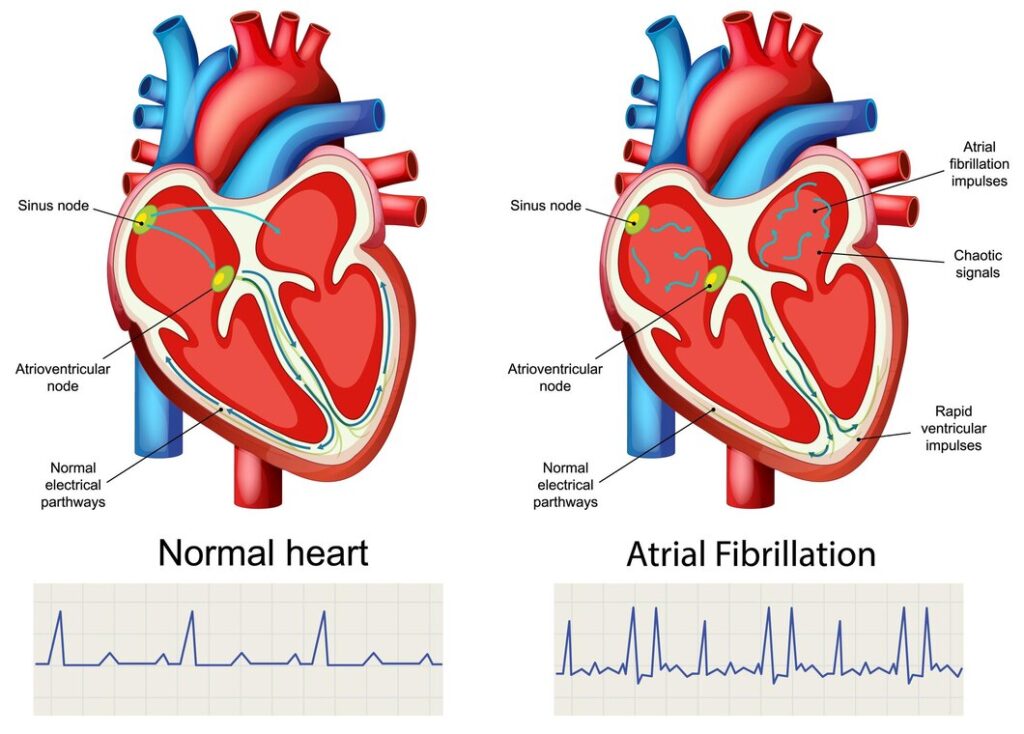
Atrial fibrillation is a common type of heart rhythm disorder. In this condition, the upper chambers of your heart beat irregularly and sometimes very quickly. Instead of a steady rhythm, your heart might beat chaotically or unevenly. This can make it challenging for your heart to pump blood effectively to the rest of your body. Atrial fibrillation might occur occasionally or become a long-term condition. While some people might not even notice the symptoms, it can increase the risk of complications like blood clots or stroke.
Symptoms
Symptoms of atrial fibrillation can vary from one person to another. Some people might feel a rapid or irregular heartbeat, often described as fluttering or pounding in the chest. Other common symptoms include fatigue or shortness of breath. In
some cases, you might not even notice the symptoms, and the condition is found during routine checkups.
Causes
Atrial fibrillation often develops because of problems affecting your heart's structure and electrical system. Conditions like high blood pressure, coronary artery disease, and heart valve problems can increase the risk. Other factors, like thyroid disorders or excessive alcohol intake, might also contribute.
Diagnosis
Doctors diagnose atrial fibrillation by checking your heart's rhythm and reviewing the symptoms. An electrocardiogram is the main test used to detect irregular heartbeats. Doctors may also recommend Holter monitoring and blood tests to better understand the condition.
Treatment
Treatment for atrial fibrillation focuses on controlling your heart rhythm, preventing complications, and improving the quality of your life. doctors might prescribe medications to regulate the heart rate rhythm or reduce the risk of those clots. Lifestyle changes, such as maintaining a healthy diet or limiting alcohol, can also help. In some cases, medical procedures such as electrical cardioversion may be used to restore a normal heart rhythm. Regular medical follow-ups are very important for monitoring the condition and ensuring the treatment plan is working well.