
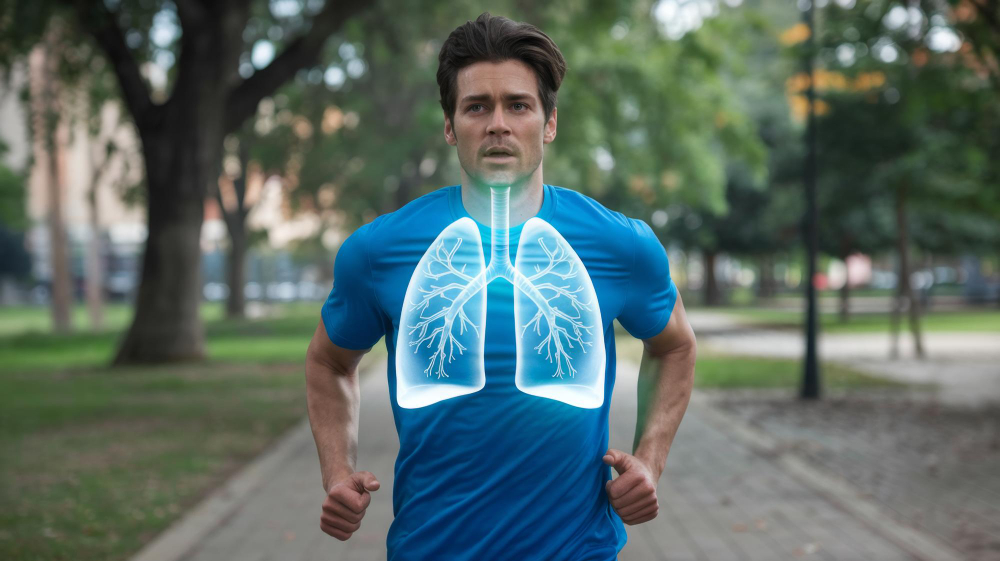
We breathe all day without thinking about it. But when we are stressed, inactive or sitting for long hours, our breathing can sometimes become shallow or less comfortable.
Breathing exercises can help you become more aware of your breathing, use your breathing muscles more effectively and make your breaths slower and more controlled. They are also used as part of breathing and rehabilitation programmes for people with certain lung conditions.
Here are three simple techniques you can try.
1. Diaphragmatic or Belly Breathing
The diaphragm is the main muscle that helps you breathe. Belly breathing focuses on using this muscle instead of relying mainly on the muscles around your chest and shoulders.
To practise:
- Sit comfortably or lie down.
- Place one hand on your chest and the other on your belly.
- Breathe in slowly and allow your belly to rise.
- Try to keep the hand on your chest relatively still.
- Breathe out slowly and let your belly fall.
- Repeat for a few minutes at a comfortable pace.
With regular practice, this can help you become more aware of your breathing and use your diaphragm more effectively.
2. Pursed-Lip Breathing
This technique focuses on slowing down your breathing, particularly the way you breathe out. It can be useful for people who experience breathlessness, especially during physical activity.
To practise:
- Sit comfortably and relax your shoulders.
- Breathe in slowly through your nose.
- Gently purse your lips as if you are about to blow out a candle.
- Breathe out slowly through your pursed lips.
- Try to make your exhalation longer than your inhalation.
This can help you slow your breathing and may make it easier to manage breathlessness.
3. Rib Expansion Breathing
Your rib cage moves as your lungs fill and empty. Rib expansion breathing focuses on becoming more aware of this movement and gently encouraging the chest to expand.
To practise:
- Sit upright with your shoulders relaxed.
- Place your hands on the sides of your lower ribs.
- Breathe in slowly through your nose.
- Feel your ribs gently move outward.
- Breathe out slowly and allow your ribs to relax.
- Repeat several times without forcing a deep breath.
This can encourage chest movement and help you become more aware of how you breathe.
Can Breathing Exercises Increase Lung Capacity?
This is where it is important to separate a common claim from what breathing exercises can actually do.
Breathing exercises do not necessarily make the lungs physically larger. Their benefits are more about how you breathe. They can help improve breathing control, encourage better use of the diaphragm and breathing muscles, and help some people manage breathlessness more comfortably.
For people with certain respiratory conditions, breathing techniques may be part of a wider rehabilitation programme alongside physical activity and other treatment.
Regular physical activity also matters. Walking, cycling, swimming and other aerobic activities can improve overall fitness and help your heart and lungs work more efficiently together.
How Often Should You Practise?
You do not need a long breathing session to get started.
Try a few minutes when you are sitting comfortably and are not rushing. Practising regularly can make these techniques easier to use when you need them, including during physical activity or periods of stress.
Do not force your breath or try to hold it for long periods. If you feel dizzy or light-headed, stop the exercise and return to your normal breathing.
When Should You See a Doctor?
Breathing exercises can be useful, but they are not a substitute for finding out why you are having difficulty breathing.
Speak with a healthcare professional if you have:
- Breathlessness that keeps returning or is getting worse
- Wheezing or a persistent cough
- Difficulty breathing during everyday activities
- Chest discomfort or pain
- Breathlessness that is new or unexplained
Sudden or severe difficulty breathing, particularly when accompanied by chest pain, fainting, confusion or bluish lips, needs urgent medical attention.
Make Every Breath Count
Healthy breathing is not only about taking deeper breaths. It is also about using your breathing muscles well, staying active and paying attention when your breathing changes.
A few minutes of controlled breathing can be a simple addition to your day. But when breathlessness or other breathing problems keep coming back, getting the right medical advice is more important than trying to manage them with exercises alone.